




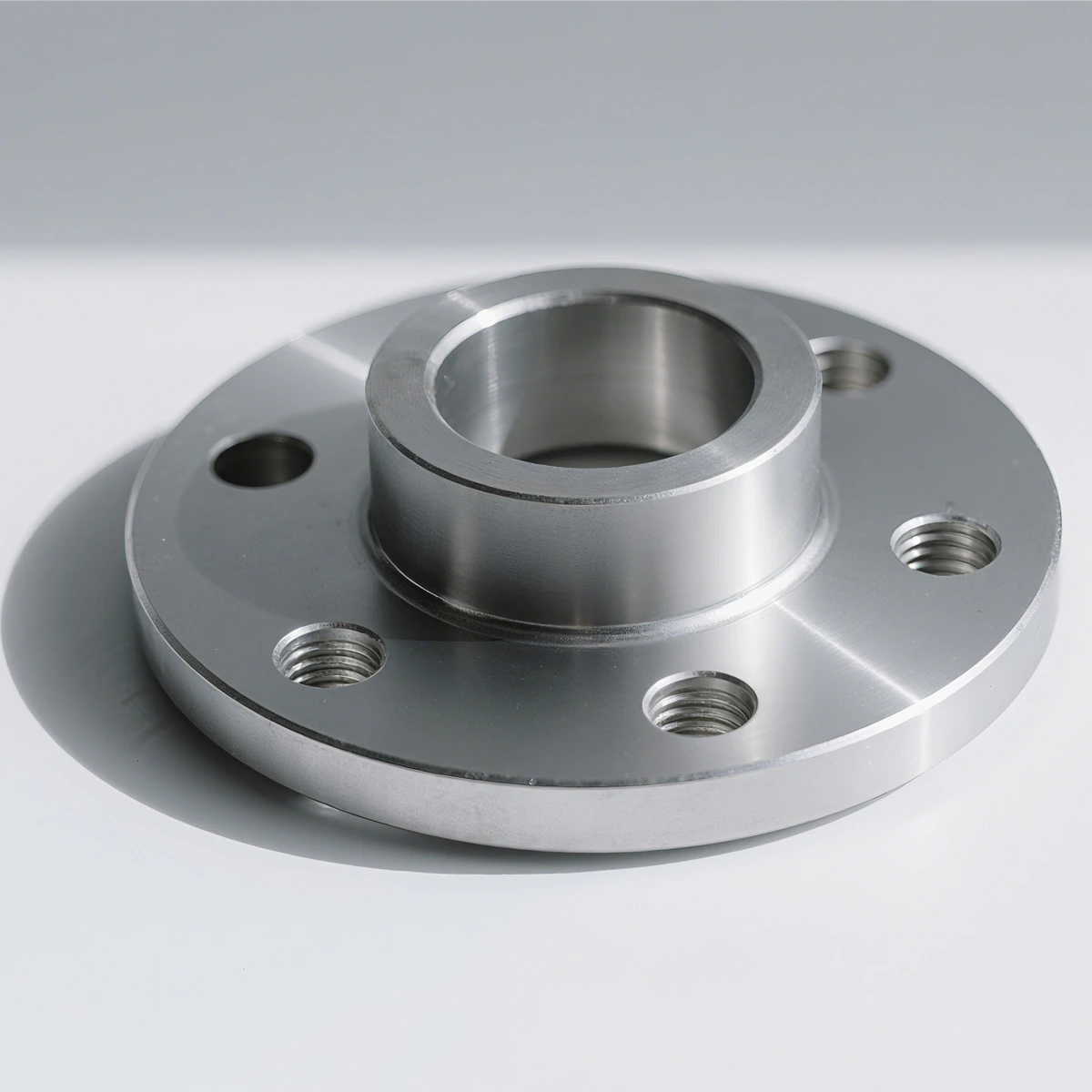
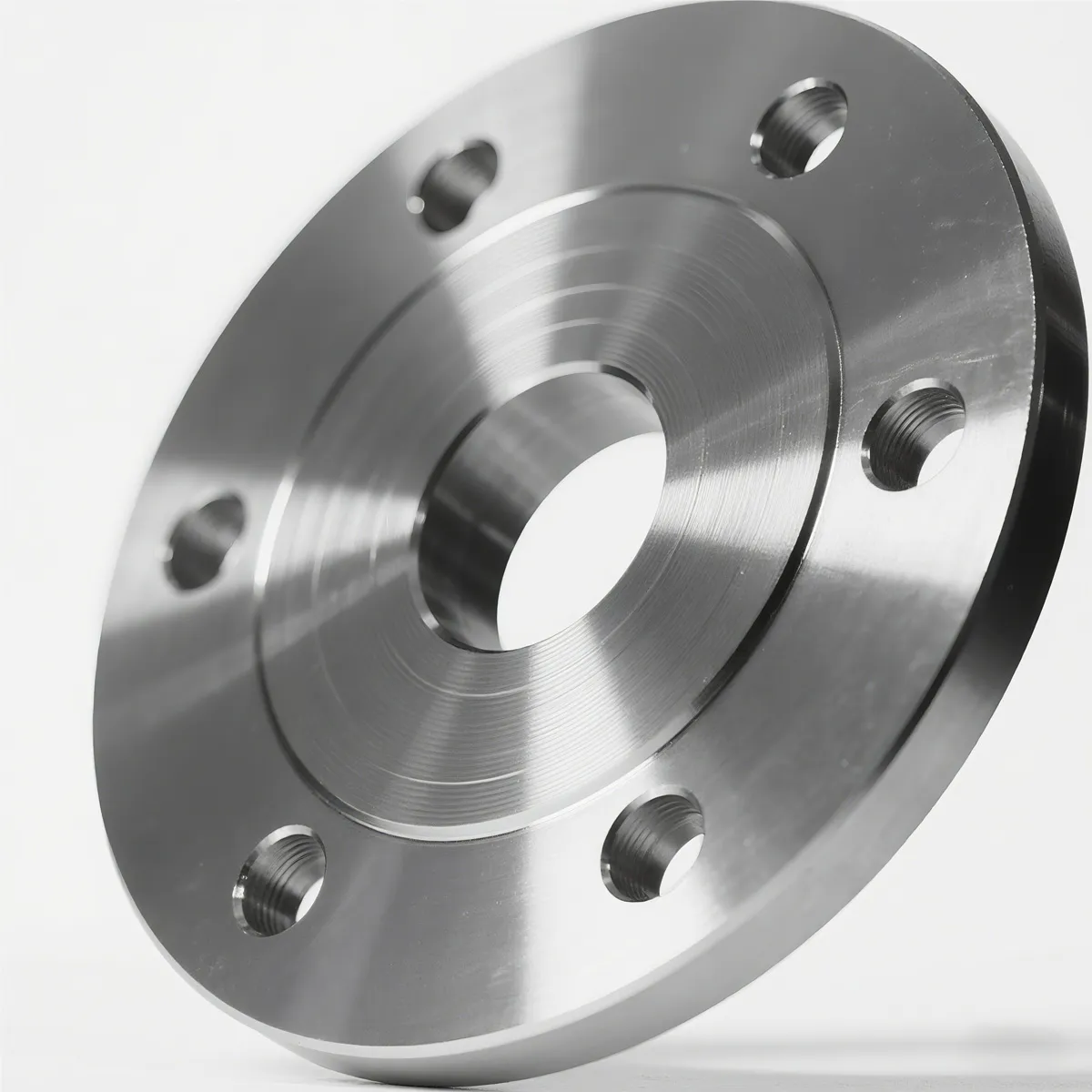
A long neck flange suits piping systems that need a tapered hub, a strong weld area, and support for demanding pressure or temperature conditions. Select it by pressure class, nominal size, material, standard, and surface finish. Our range covers PN6 to PN40, Class 150 to Class 2500, DN10 to DN2000, and several carbon steel, stainless steel, and surface coating options.
Pressure class and nominal size must match the piping design and mating connection.
Material and standard must match the process, temperature, project drawings, and dimensional basis.
Surface coating must match the installation environment, storage plan, and project coating system.
Start with the service conditions
A long neck flange is a practical choice for high-pressure or high-temperature piping when the connection needs a tapered hub that transitions gradually into the pipe. That geometry distributes stress along the hub and helps reduce deformation at the joint. The neck ends in a bevel. When the pipe is fitted flush to that end, the joint forms a trough for welding.
Picture a refinery line, a power plant steam or water line, or a chemical process connection. In each case, the flange must match the line's pressure class, size, material, applicable standard, and surface finish before an order is placed. The long tapered hub makes this product suitable for buyers who need a weld-neck connection for demanding service conditions.
Match the pressure class to the line
Pressure class is the first specification to settle. Our Long Neck Flange is available from PN6 to PN40 and from Class 150 to Class 2500. Select the rating system that matches your piping design and the mating components already used in the line. A flange with the wrong pressure class can prevent proper assembly even when its nominal size appears correct.
Class 150 through Class 2500 covers projects specified with Class designations. PN6 through PN40 covers projects using PN designations. Put the required pressure designation on the inquiry so we can prepare the matching flange configuration. The pressure designation should be considered with the nominal size and connection standard, not as an isolated number.
Check size and connection geometry
Nominal size controls whether the flange can connect to the pipe and mating flange. The available range is DN10 to DN2000, 1/2 inch to 24 inch, and S.A. 12 inch to 60 inch. Confirm the sizing system used by the project, then provide the exact nominal size and mating connection details.
The long tapered hub is the defining selection point. It gradually merges with the pipe, and the beveled end creates the welding area. For a pipeline installation, check the pipe outside diameter and wall details used by the project before requesting a quotation. A drawing or connection schedule helps us review the flange and pipe fit as one assembly.
Select the material for the process
Material should follow the fluid, temperature, pressure, and project specification. Our carbon steel choices include ASTM A105, P235GH, P245GH, P250GH, P265GH, and ST37-2. Stainless steel choices include ASTM A182, 304, and 306. Alloy steel is also available as a material group.
Carbon steel is the starting point when the piping specification calls for one of the listed carbon steel grades. Stainless steel is the relevant starting point when the project calls for a stainless material. For chemical or petrochemical service, send the fluid information and required material grade so we can match the flange to the process specification. The industry name alone does not define the correct grade.
A useful working example is a chemical transport line with a specified stainless grade. The material grade, pressure designation, nominal size, and standard should travel together in the flange schedule. A refinery or power project may instead identify a carbon or alloy steel requirement in its piping specification. Use that stated grade when preparing the request.
Confirm the standard before fabrication
The available standards are ASME, EN, JIS, DIN, BS, KS, GOST, SABS, and ATK. Use the standard named in the piping drawings or equipment connection schedule. The standard affects the dimensional basis used for the flange, so confirm it together with nominal size and pressure class.
Place these three items together on the inquiry: standard, pressure designation, and nominal size. A request that gives only “long neck flange” leaves the connection basis open. A request that includes the standard, PN or Class rating, and DN or inch size gives our team a workable starting point for reviewing the configuration.
Choose the surface finish for the service and handling plan
Our surface coating choices are black paint, galvanize, grease, and epoxy paint. Select the finish specified for the installation environment, storage plan, and project coating system. The finish should also be compatible with the way the flange will be handled before installation.
For a pipeline package, include the required coating in the material schedule. For a stored spare or a flange intended for a particular site environment, include the finish with the pressure class, size, material, and standard. Keeping these details together helps maintain one consistent order description from drawing review through supply.
Where a long neck flange fits
Long neck flanges are used in oil and gas pipelines, refineries, offshore platforms, power generation, and chemical or petrochemical systems. In power generation, the product is used for high-pressure steam, water, and gas lines, including connections associated with boilers, turbines, and heat exchangers. In chemical service, the long hub supports stress distribution at connections used with reactors, distillation columns, and transport pipelines.
Choose our Long Neck Flange when the project needs a long tapered hub and a defined pressure, size, material, standard, and coating requirement. It suits a line whose design has already identified demanding pressure or temperature service. Before ordering, align the mating pipe, rating, dimensions, material, and finish.
Prepare the purchase request
A complete request should identify the pressure class, nominal size, material grade, standard, surface coating, pipe details, quantity, and drawing reference. Include the service context when the flange will be used in a pipeline, refinery, power plant, or chemical system. These details let us review the connection as a complete configuration instead of a product name alone.
Send the flange schedule and mating pipe information with your requested quantity so we can prepare a quotation for the required Long Neck Flange configuration.

About the author
The company
HEBEI JIUYUAN PIPELINE MANUFACTURING CO.,LTD .
HEBEI JIUYUAN PIPELINE MANUFACTURING CO.,LTD . is located in Mengcun Hui Autonomous County, known as the "Capital of Elbows", with a registered capital of 10.09 million yuan. The company is equipped with advanced production facilities, strong technical capabilities and strict testing equipment, ranking among the top in the industry for its excellent quality and service. We have always been committed to technological innovation and improving product quality.…
About Us ↗Visit company website ↗
-
 Oct. 23, 2025
ASME-compliant slip on weld flanges deliver precise fit, leak-tight sealing, and corrosion resistance. Ideal for pipelines, refineries, water treatment, and HVAC. Get a fast quote today.
-
 Dec. 02, 2025
Explore the essential role of galvanized blind flanges in pipeline infrastructure. Learn about benefits, applications, future trends, and vendor comparisons for industrial use.
 Albanian
 Arabic
 Armenian
 Azerbaijani
 Belarusian
 Bengali
 Bulgarian
 Croatian
 Czech
 Danish
 Dutch
 Esperanto
 Finnish
 French
 German
 Greek
 Hebrew
 Hungarian
 Indonesian
 Irish
 Italian
 Japanese
 Khmer
 Korean
 Kyrgyz
 Lao
 Latin
 Lithuanian
 Malay
 Myanmar
 Norwegian
 Persian
 Polish
 Portuguese
 Romanian
 Russian
 Serbian
 Slovak
 Slovenian
 Spanish
 Swedish
 Tagalog
 Thai
 Turkish
 Turkmen
 Uzbek
 Vietnamese
 Zulu
 English


