




THE BUYER'S GUIDE / SELECTION
Choosing a Blind Flange: Application Fit and Specification Checks
A buyer-focused guide to choosing a blind flange from HEBEI JIUYUAN PIPELINE MANUFACTURING CO.,LTD . It covers the listed pressure classes, size ranges, materials, standards and surface coatings, points out where the product description contradicts itself on service conditions, and lists what to confirm before you order.
Service conditions: medium, design pressure and temperature, and corrosive or noncorrosive environment. Get written confirmation, because the source description contradicts itself on low-pressure versus high-pressure use.
Pressure class match: listed PN6–PN40 and Class 150–Class 2500
Size match with the mating flange: listed DN10–DN2000, ½ in–24 in, and S.A 12 in–60 in
Material: carbon steel (ASTM A105, P235GH, P245GH, P250GH, P265GH, ST37-2) or stainless steel (listed as ASTM A182/304/306). The text mentions alloy steel but names no grade.
Standard: ASME, EN, JIS, DIN, BS, KS, GOST, SABS or ATK, matched to the mating flange
Facing that matches the mating flange (flat or raised surface) and a suitable gasket, which is sold separately
Surface coating: black paint, galvanize, grease or epoxy paint
Choosing a Blind Flange: Application Fit and Specification Checks
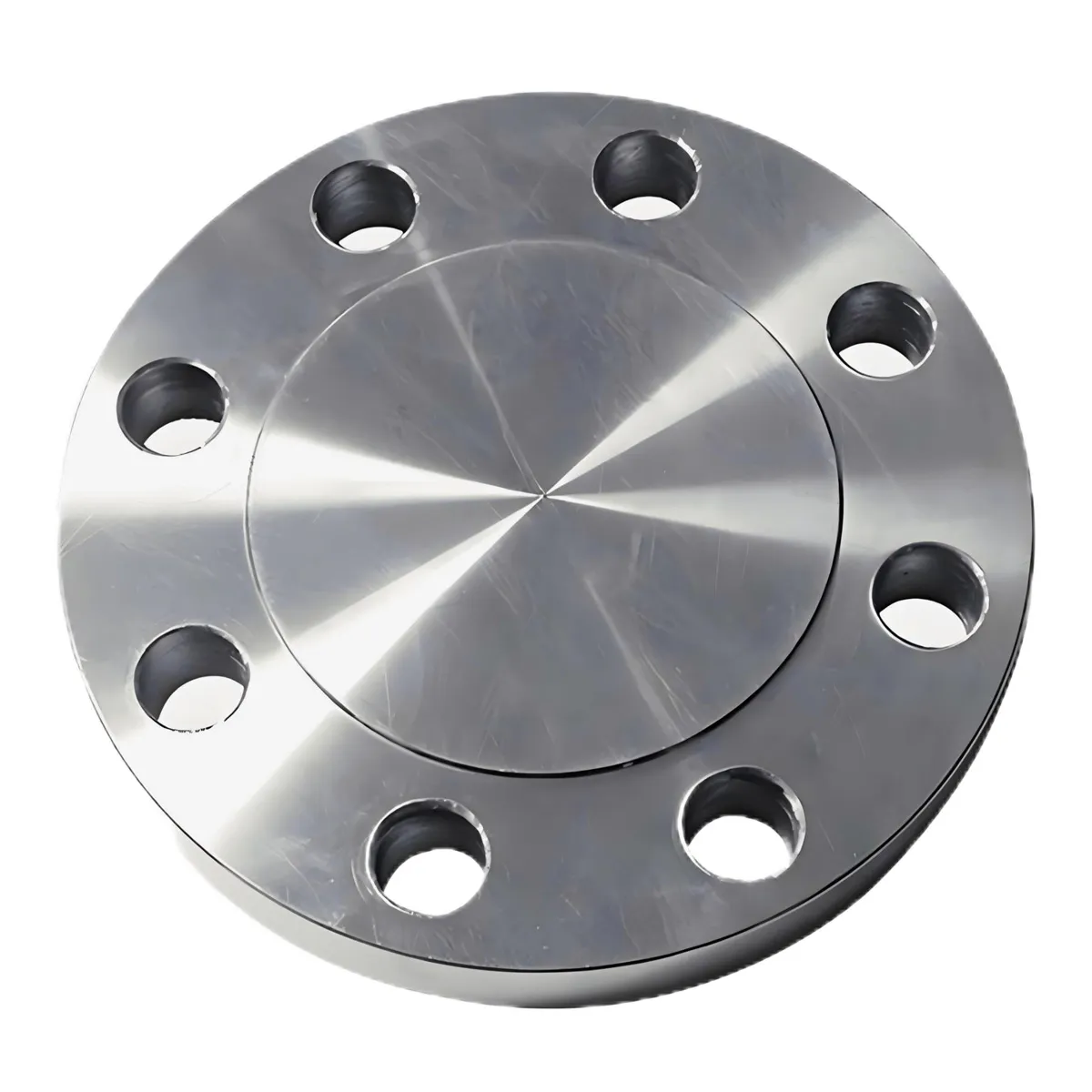
A blind flange is a solid disk with no center hole. It closes off the end of a pipeline, a valve, or a pressure vessel opening. Because it bolts onto a matching flange and can be removed later, it is used where a line may be extended, inspected or maintained in the future. The product description also says blind flanges are often used during pipeline pressure testing.
This guide explains how procurement teams can check a blind flange from HEBEI JIUYUAN PIPELINE MANUFACTURING CO.,LTD . against their project requirements. It uses only the published product specification. Price, lead time and certification are not covered here and have to be confirmed directly with the supplier.
1. Start with your service conditions
Write down these details before comparing options:
- Medium: what fluid or gas the line carries, and whether it is corrosive.
- Design pressure and temperature: the class or PN rating your piping system needs.
- Mating flange: its size, pressure rating, standard and facing type.
- Purpose of the closure: permanent end closure, temporary isolation, future expansion, inspection access or pressure testing.
Check the service conditions carefully. The source description contradicts itself. One part says the flanges "are for use with low-pressure applications in noncorrosive environments." Other parts describe use in "high-pressure and high-temperature environments." Do not assume either statement fits your project. Ask for written confirmation of the pressure-temperature rating for the material, class and size you plan to order.
2. Match pressure class and size
The published ranges are:
| Item | Listed range |
|---|---|
| PN / Class | PN6 – PN40 / Class 150 – Class 2500 |
| DN / Inch | DN10 – DN2000 / ½ in – 24 in / S.A 12 in – 60 in |
The blind flange has to match the size and rating of the flange it bolts onto. A product line that covers a wide range does not mean every combination of size, class and material is available. Confirm your exact combination when you request a quote. The "S.A 12in – 60in" entry is not explained in the source, so ask what it refers to.
3. Choose the material
Listed materials:
- Carbon steel (CS): ASTM A105, P235GH, P245GH, P250GH, P265GH, ST37-2
- Stainless steel (SS): listed as ASTM A182 / 304 / 306
The descriptive text also mentions alloy steel, but the specification table names no alloy steel grade. If you need alloy steel, ask for the exact grade. Choose the material based on the medium, temperature and corrosion conditions, and confirm the stainless steel grade designation as written in the listing before you order.
4. Confirm the standard
Listed standards: ASME, EN, JIS, DIN, BS, KS, GOST, SABS and ATK. Name the exact standard and edition your project uses. Bolt pattern, dimensions and rating have to match the mating flange.
5. Check the facing and the gasket
The product description refers to bolting two flat-surface flanges or two raised-surface flanges of the same size together with a gasket. The gasket is sold separately. When you compare blind flange types for your line, match the facing of the mating flange. Then choose a gasket that suits the fluid and pressure. The source also notes that flange faces and gaskets should be clean and free of debris before installation.
6. Select a surface coating
Listed coatings: black paint, galvanize, grease and epoxy paint. Choose one based on storage, transport and site conditions, and state it on your purchase order.
Industries named in the source
The product description names oil and gas, chemical processing, petrochemicals, power generation, water treatment and shipbuilding. Being used in an industry does not show that a product suits a specific service. Base your decision on the checks above.
When this recommendation does not apply
- Your required size, class, material or standard is outside the listed ranges.
- You need an alloy steel grade, a facing type or a certification that the source does not document.
- You need confirmed performance in corrosive, high-pressure or high-temperature service and have no written supplier confirmation.
- You need pricing, lead time or delivery commitments. These are not covered by the available material.
Pre-order checklist for a blind flange
- Size (DN or inch) and pressure class or PN
- Standard and edition
- Material grade
- Facing type that matches the mating flange
- Surface coating
- Gasket sourced separately
- Written confirmation of service limits for your medium, pressure and temperature
If you are evaluating a blind flange for sale for an upcoming project, send this checklist to HEBEI JIUYUAN PIPELINE MANUFACTURING CO.,LTD . with your inquiry so the quote matches your requirements.
THE PEOPLE

About the author
THE COMPANY
HEBEI JIUYUAN PIPELINE MANUFACTURING CO.,LTD .
HEBEI JIUYUAN PIPELINE MANUFACTURING CO.,LTD . is located in Mengcun Hui Autonomous County, known as the "Capital of Elbows", with a registered capital of 10.09 million yuan. The company is equipped with advanced production facilities, strong technical capabilities and strict testing equipment, ranking among the top in the industry for its excellent quality and service. We have always been committed to technological innovation and improving product quality.…
About Us ↗Visit company website ↗YOUR NEXT STEP
Bring your brief. Start a useful conversation.
Use case, specification, quantity and delivery window: make the next conversation specific.
-
 Sep. 09, 2025
Discover advanced blind flange solutions with high strength, international standard compliance, and easy installation. HEBEI JIUYUAN PIPELINE MANUFACTURING CO.,LTD . ensures reliable performance for oil & gas, chemical, and power industries. Explore now: https://www.hbjypipeline.com/blind-flange.html
-
 Nov. 27, 2025
Discover the benefits, specifications, and global applications of 6 inch pipe flanges. Explore top vendors, FAQs, and future trends in piping infrastructure.
 Albanian
 Arabic
 Armenian
 Azerbaijani
 Belarusian
 Bengali
 Bulgarian
 Croatian
 Czech
 Danish
 Dutch
 Esperanto
 Finnish
 French
 German
 Greek
 Hebrew
 Hungarian
 Indonesian
 Irish
 Italian
 Japanese
 Khmer
 Korean
 Kyrgyz
 Lao
 Latin
 Lithuanian
 Malay
 Myanmar
 Norwegian
 Persian
 Polish
 Portuguese
 Romanian
 Russian
 Serbian
 Slovak
 Slovenian
 Spanish
 Swedish
 Tagalog
 Thai
 Turkish
 Turkmen
 Uzbek
 Vietnamese
 Zulu
 English


