



Selecting reliable flange manufacturers is a critical decision for engineers and procurement officers in the pressure vessel and piping industry. Flanges serve as the essential connection points in piping systems, ensuring leak-proof joints and structural integrity under extreme pressure and temperature conditions. In the specialized field of metal pressure vessel manufacturing, the quality of these components directly impacts the safety and longevity of the entire industrial infrastructure.
The primary challenge for buyers is navigating the gap between generic commercial-grade fittings and high-specification industrial components. Many projects fail not due to design errors, but because of material inconsistencies or dimensional deviations from suppliers who lack rigorous certification. Ensuring compliance with international standards like ASME, DIN, and JIS requires a manufacturer with integrated testing capabilities and specialized material processing experience.
This guide provides a professional framework for evaluating suppliers, analyzing material suitability for carbon and stainless steels, and understanding the technical parameters that define high-performance flanges. By focusing on manufacturing precision and certification standards, readers can optimize their procurement process and mitigate operational risks in petroleum, chemical, and power plant applications.

Critical Technical Standards for Flange Selection

For industrial piping, adherence to global standards is non-negotiable. Flange manufacturers must operate under strict guidelines such as ANSI/ASME for North American markets, DIN for European applications, and JIS for Asian infrastructure. These standards dictate not only the outer dimensions and bolt hole patterns but also the pressure-temperature ratings, ensuring that components from different suppliers remain interchangeable and safe.
Beyond dimensions, the execution standards encompass the "facing" of the flange—such as Raised Face (RF) or Flat Face (FF)—which determines the type of gasket used and the sealing efficiency. Hebei Jiuyuan Pipeline Manufacturing Co., Ltd. integrates these standards (GB, ANSI, JIS, DIN) into their production flow, ensuring that every component produced meets the specific technical requirements of the destination industry, whether it be aerospace or urban construction.
Material Analysis: Carbon vs. Stainless and Alloy Steels
Material selection is the first line of defense against systemic failure. Carbon steel is the standard for general-purpose applications due to its cost-effectiveness and strength. However, in corrosive environments such as chemical processing or pharmaceutical plants, stainless steel, duplex steel, or nickel-based alloys are required to prevent oxidation and stress corrosion cracking.
Advanced manufacturers provide a broad spectrum of materials, including low-temperature steel for cryogenic applications and alloy steels for high-heat environments. The ability to source and process these diverse materials is what separates basic suppliers from professional manufacturers. Proper material certification (MTRs) is essential to verify that the chemical composition and mechanical properties match the engineering specifications provided by the customer.
Manufacturing Processes: Forging and Casting Comparison
The method of production fundamentally alters the internal grain structure of the metal. Forged products are typically preferred for high-pressure applications because the forging process aligns the grain flow, resulting in superior strength and fatigue resistance. Forged flanges are less prone to internal voids and porosities, making them the gold standard for critical pressure pipeline components.
Conversely, cast products offer greater design flexibility for complex geometries and are often more economical for very large diameters where forging is impractical. Professional manufacturers maintain capabilities in both precision casting and forging to offer the right balance of performance and cost. The choice between a cast or forged flange should be based on the calculated hoop stress and the operational safety factor of the specific system.
Evaluating Supplier Quality Control Frameworks
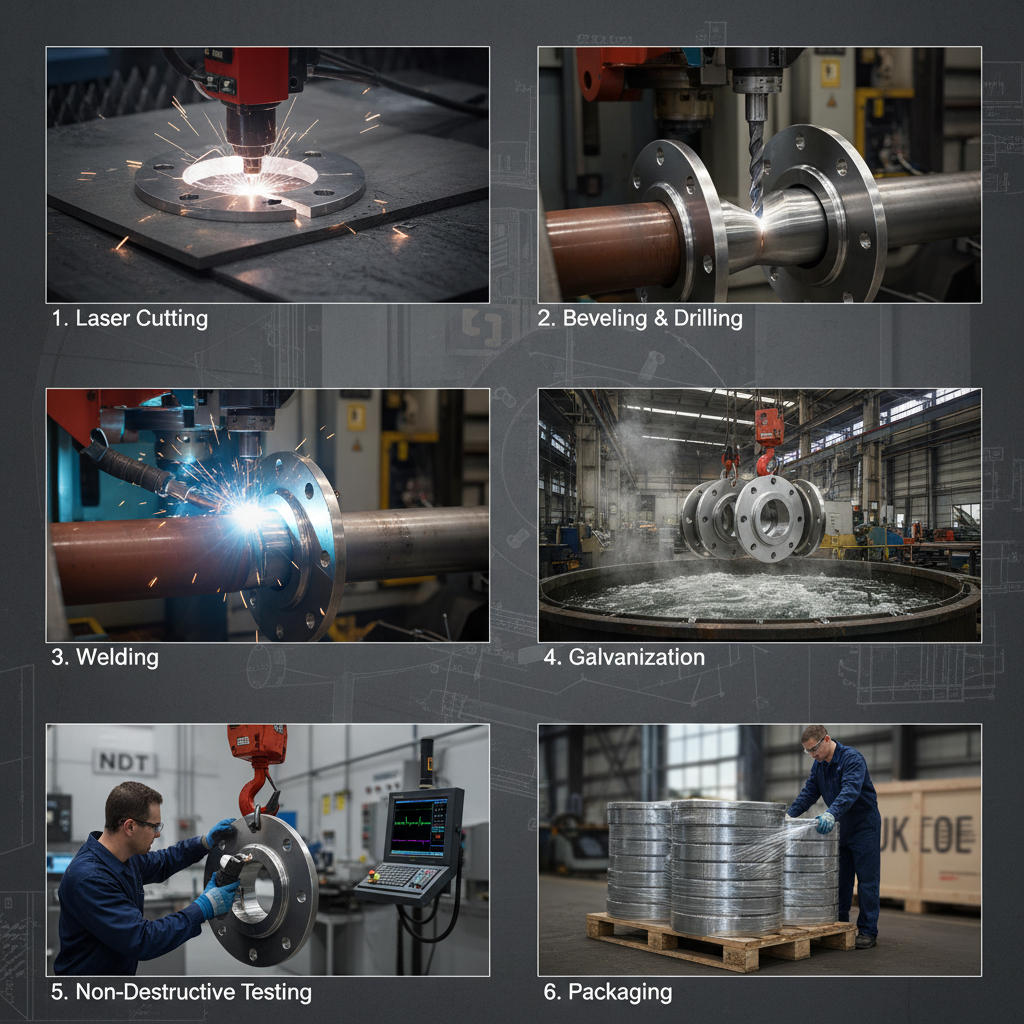
Quality assurance in flange manufacturing is measured by the precision of testing equipment and the rigor of the certification process. A professional manufacturer does not rely on final inspections alone but implements a comprehensive quality system, such as ISO9001, throughout the production lifecycle. This includes raw material verification, in-process dimensional checks, and final non-destructive testing (NDT).
The following conceptual chart illustrates the relative impact of different quality control dimensions on the final reliability of the component. Material purity and dimensional accuracy are the highest drivers of success, while documentation and packaging, though necessary, have a lower direct impact on structural integrity. Manufacturers who prioritize the "Technical Core" (Materials and Precision) consistently produce lower failure rates in the field.
Application-Specific Configuration Requirements
Different industries demand distinct flange characteristics. In the petroleum and gas sector, the focus is on high-pressure containment and resistance to hydrogen embrittlement. In pharmaceutical and food-grade applications, the surface finish (Ra value) of the flange face is critical to prevent bacterial growth and ensure sterile conditions. This requires specialized polishing and cleaning protocols during the manufacturing phase.
Furthermore, urban construction and water heating systems prioritize corrosion resistance and cost-efficiency, often utilizing carbon steel with specific coatings. The capacity to customize special and difficult pipe fittings—such as varying the wall thickness or creating non-standard bolt patterns—is a hallmark of an experienced manufacturer capable of supporting complex engineering blueprints.
Common Procurement Risks and Mitigation Strategies
The most common risk when engaging flange manufacturers is the "substitution of materials," where a supplier uses a lower grade of steel than specified to reduce costs. This often goes unnoticed until the system is under operational stress. To mitigate this, buyers should demand Material Test Reports (MTRs) and conduct independent third-party verification via Positive Material Identification (PMI) testing.
Another frequent issue is dimensional variance, particularly in the flange face flatness. Even a slight deviation can lead to gasket failure and leaks. Mitigation involves requesting a dimensional inspection report for the first batch of a large order and verifying that the manufacturer holds specialized equipment certifications for pressure pipelines, ensuring their tooling is calibrated to international tolerances.
Supplier Evaluation Matrix for Industrial Buyers
When comparing multiple flange manufacturers, procurement teams should use a weighted matrix rather than focusing solely on the unit price. The total cost of ownership includes the risk of failure, the cost of downtime, and the ease of installation. A supplier that offers a comprehensive range of related products—such as elbows, tees, and reducers—can often reduce logistics costs and ensure better system compatibility.
| Evaluation Metric | Low-Tier Supplier | Standard Manufacturer | Premium Specialist |
|---|---|---|---|
| Certification | Basic Business License | ISO 9001 | ISO + Special Equipment Cert |
| Material Range | Carbon Steel Only | Carbon & Stainless | Alloys, Duplex, Nickel-base |
| Quality Testing | Visual Inspection | Dimensional Check | NDT + PMI + Pressure Test |
| Customization | Standard Sizes Only | Limited Customization | Complex Technical Drawings |
| Standard Compliance | Approximate GB | GB / ANSI / JIS | Full Global Standard Suite |
| Lead Time Risk | High (Unstable) | Moderate | Low (Integrated Production) |
As shown in the matrix, a premium specialist like Hebei Jiuyuan Pipeline Manufacturing Co., Ltd. provides the highest level of risk mitigation through specialized certifications and a wider material capability. For critical pressure vessel projects, the investment in a premium supplier is typically offset by the reduction in insurance premiums and the avoidance of costly field repairs.
Frequently Asked Questions
The most common standards are ASME/ANSI (predominant in North America), DIN/EN (European), and JIS (Japanese). The choice depends on the regional regulations of the project site and the specific industry requirements.
Forged flanges are created by compressing metal under high pressure, resulting in a denser grain structure and higher strength. Cast flanges are made by pouring molten metal into a mold, allowing for more complex shapes but generally offering lower pressure ratings.
Always request a Material Test Report (MTR) from the manufacturer. For critical components, use Positive Material Identification (PMI) testing, which uses X-ray fluorescence to verify the chemical composition of the metal on-site.
Stainless steel, duplex steel, and nickel-based alloys are the primary choices for corrosion resistance. The specific alloy is chosen based on whether the environment is acidic, alkaline, or contains high concentrations of chlorides.
A Raised Face flange has a small raised area around the bore. This concentrates the gasket pressure over a smaller area, creating a more effective seal and allowing for the use of a wider variety of gasket materials.
Yes, professional manufacturers can customize flanges based on customer-provided technical drawings. This includes adjustments to thickness, bolt patterns, and material specifications for special industrial applications.
Conclusion
Selecting the right flange manufacturers requires a shift in focus from unit cost to total system reliability. By prioritizing verified material certifications, adherence to international standards (ASME, DIN, JIS), and a proven quality control framework, companies can significantly reduce the risk of catastrophic leaks and operational downtime in pressure vessel environments. The integration of forging capabilities and a broad material portfolio remains the most reliable indicator of a manufacturer's technical maturity.
For procurement teams seeking components that meet rigorous safety and technical specifications, reviewing the capabilities and product range at www.hbjypipeline.com can provide the necessary technical foundation for a secure piping infrastructure.



 English
 Albanian
 Arabic
 Armenian
 Azerbaijani
 Belarusian
 Bengali
 Bulgarian
 Croatian
 Czech
 Danish
 Dutch
 Esperanto
 Finnish
 French
 German
 Greek
 Hebrew
 Hungarian
 Indonesian
 Irish
 Italian
 Japanese
 Khmer
 Korean
 Kyrgyz
 Lao
 Latin
 Lithuanian
 Malay
 Myanmar
 Norwegian
 Persian
 Polish
 Portuguese
 Romanian
 Russian
 Serbian
 Slovak
 Slovenian
 Spanish
 Swedish
 Tagalog
 Thai
 Turkish
 Turkmen
 Uzbek
 Vietnamese
 Zulu