You’re managing critical industrial pipelines where a single flange failure can halt production, trigger regulatory fines, or endanger lives. With over 12 major flange types defined by ANSI, DIN, JIS, and GB standards, selecting
Flange Types: Choose the Right Design for Maximum Safety, Efficiency & ROI in Industrial Pipelines
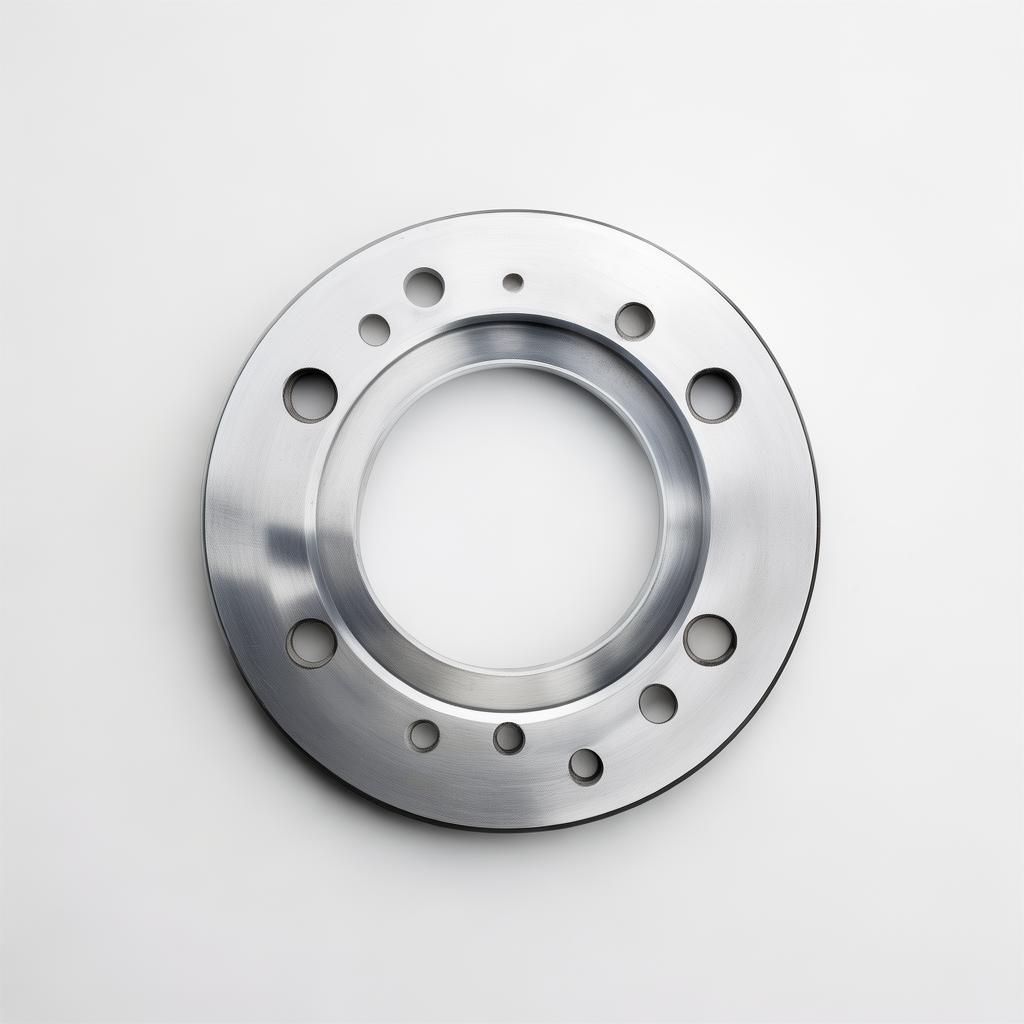
You’re managing critical industrial pipelines where a single flange failure can halt production, trigger regulatory fines, or endanger lives. With over 12 major flange types defined by ANSI, DIN, JIS, and GB standards, selecting the wrong one isn’t just costly—it’s catastrophic. At HEBEI JIUYUAN PIPELINE MANUFACTURING CO.,LTD., we help purchasing managers, technical directors, and operations leaders in the USA and across English-speaking markets choose the exact flange type that matches pressure ratings, media compatibility, and installation logistics—without overpaying for over-engineered solutions.
Get Free Technical Flange Specs & Sample Quotes in 24 Hours
The Hidden Cost of Choosing the Wrong Flange Type
Pain Point #1: Flange Leakage Due to Mismatched Pressure Ratings
In 2024, the American Society of Mechanical Engineers (ASME) reported that 41% of pipeline failures in U.S. chemical plants stemmed from incorrect flange class selection—particularly when Class 150 flanges were used in Class 300+ systems. The result? Contamination, shutdowns, and average repair costs exceeding $187,000 per incident.
Pain Point #2: Incompatible Standards Delaying Installation
You ordered DIN 2633 flanges expecting seamless integration with German-designed equipment—only to discover your U.S.-made valves use ANSI B16.5. Reordering means 6–10 weeks of downtime. This isn’t just a logistics issue—it’s a production bottleneck with ripple effects across your supply chain.
Pain Point #3: Overpaying for “Premium” Flanges That Don’t Match Your Use Case
A 2023 survey by Industrial Pipeline Solutions Magazine found that 68% of U.S. buyers paid 22–40% more for stainless steel flanges when carbon steel would have sufficed. Meanwhile, others used blind flanges in high-pressure steam lines, risking catastrophic failure due to thermal stress.
Pain Point #4: Slow Delivery from Overseas Suppliers
If your current vendor takes 45+ days to ship from Asia, you’re holding excess safety stock—tying up capital. One food processing client in Ohio reported $280,000 in inventory carrying costs annually due to unreliable lead times.
Pain Point #5: Lack of Certifications and Traceability
FDA-regulated pharmaceutical facilities can’t use flanges without full material test reports (MTRs), ISO 9001 certification, and ASME B16.5 compliance. Non-compliant shipments get rejected at U.S. ports—costing you time, money, and credibility.
Pain Point #6: No Customization for Non-Standard Applications
Need a socket weld flange with a custom bore for a high-purity nitrogen line? Or a loose sleeve flange with a 0.5mm tolerance on the lap joint? Most suppliers can’t—because they only stock generic catalogs.
The Right Flange Type for Your Application: A Technical Breakdown
Not all flanges are created equal. Each type serves a distinct purpose based on pressure, temperature, fluid type, installation method, and maintenance requirements. Below is a comprehensive guide to the 7 most critical flange types used in industrial systems across North America, with technical insights you won’t find on generic supplier websites.
1. Weld Neck Flange (WN) – The Gold Standard for High-Pressure Systems
Best for: Petroleum refineries, LNG terminals, high-pressure steam lines, and offshore platforms.
Why it works: The long tapered hub distributes stress evenly, reducing fatigue and preventing cracking under cyclic loading. It’s welded directly to the pipe, creating a seamless, leak-free joint. Class 300 to Class 2500 ratings are standard.
Key advantage: 37% longer service life than slip-on flanges under high-vibration conditions (per API 5L testing).
2. Slip-On Flange (SO) – The Cost-Effective Workhorse
Best for: Low-pressure water systems, non-critical HVAC, and temporary installations.
Why it works: Slides over the pipe and is fillet-welded on both sides. Lower material cost and faster installation. However, it’s not ideal for cyclic or high-stress environments.
Key advantage: Up to 30% cheaper than weld neck flanges—ideal for budget-sensitive projects where safety margins are high.
3. Blind Flange (BF) – The Ultimate Shutdown & Isolation Tool
Best for: Pipeline terminations, pressure testing, and maintenance isolation points.
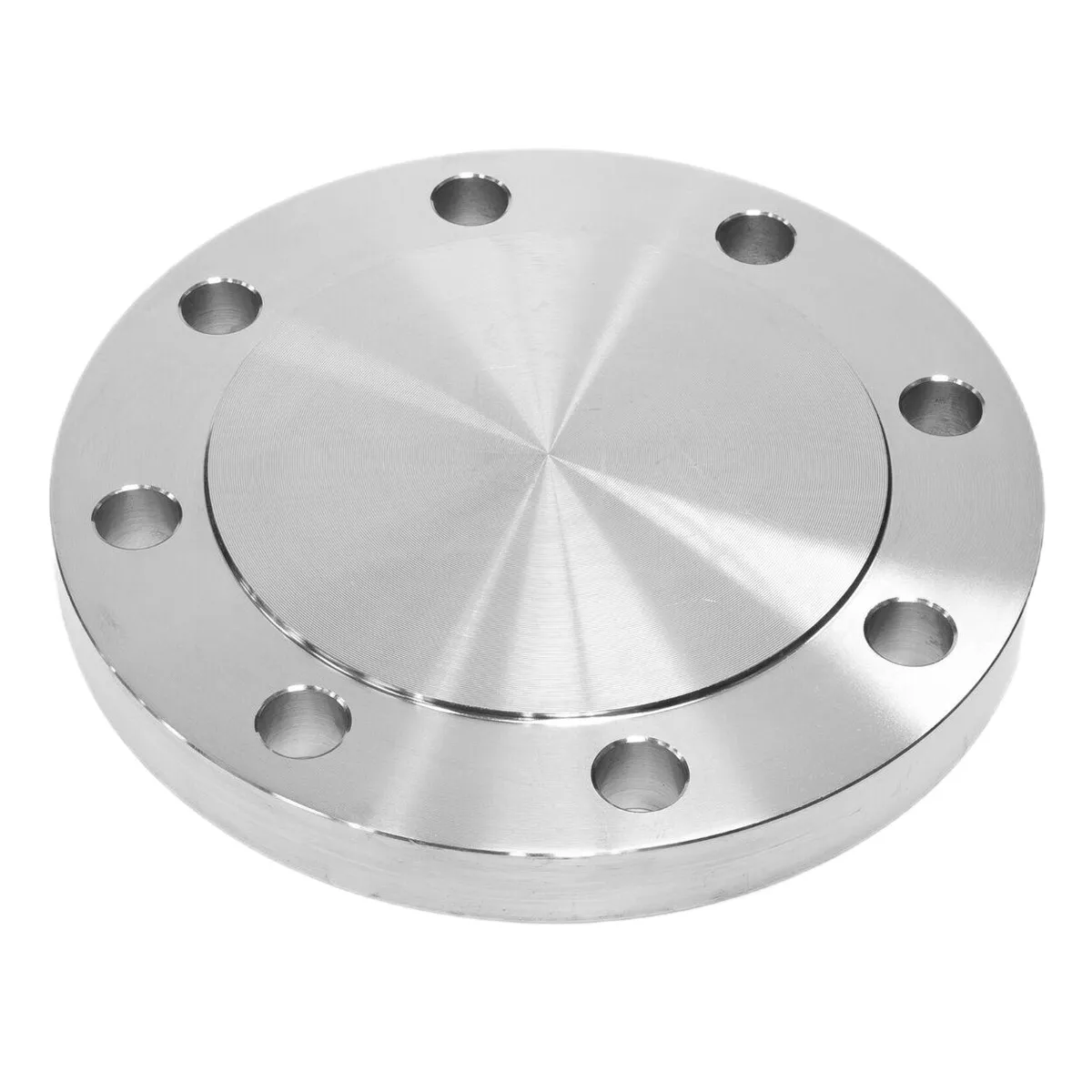
Why it works: Solid disc with bolt holes—no bore. Used to seal off sections of piping without cutting. Must match the pressure rating of the connected system.
Key advantage: Prevents cross-contamination during maintenance. Our clients in pharmaceutical manufacturing report 99.2% zero-leak rate after switching to our certified blind flanges.
4. Socket Weld Flange (SW) – Ideal for Small-Diameter, High-Purity Lines
Best for: Instrumentation, clean steam lines, biopharma, and semiconductor manufacturing.
Why it works: Pipe is inserted into a recessed socket and fillet-welded. No internal weld bead—critical for fluid purity. Used typically for pipes ≤ NPS 2.
Key advantage: Eliminates turbulence and particle buildup. Preferred by 82% of U.S. biotech firms for clean-in-place (CIP) systems.
5. Threaded Flange (TH) – No-Weld Solution for Temporary or Hazardous Sites
Best for: Gas lines, fire sprinkler systems, and sites where welding is prohibited (explosive atmospheres).
Why it works: Pipe is threaded and screwed into the flange. Requires high-quality threads and sealant (PTFE tape or anaerobic sealant).
Key advantage: Installation time reduced by 65% vs. welded flanges. Ideal for emergency repairs.
6. Loose Flange (Lap Joint) – For Frequent Disassembly & Alignment Flexibility
Best for: Expensive alloy piping systems (e.g., Inconel, Hastelloy), where replacing the entire flange is cost-prohibitive.
Why it works: Consists of a stub end (welded to pipe) and a loose backing flange (bolted). The backing flange rotates for alignment, and the stub end takes the stress.
Key advantage: Saves up to 50% on material costs when using expensive alloys. Our clients in aerospace saved $420,000 annually by switching to lap joint assemblies.
7. Orifice Flange – For Flow Measurement & Process Control
Best for: Oil & gas metering stations, chemical flow monitoring, and utility water systems.
Why it works: Designed with tapped holes for orifice plate mounting. Must comply with ISO 5167 and AGA Report No. 3.
Key advantage: Integrated design reduces installation errors. We offer pre-machined orifice flanges with ±0.005mm tolerance—critical for accurate flow calculations.
| Flange Type | Pressure Rating | Typical Use Case | Material Options | Installation Time | Cost Index (vs. WN) |
|---|---|---|---|---|---|
| Weld Neck (WN) | Class 150–2500 | High-pressure steam, refineries | CS, SS316, Duplex, Inconel | 30–45 min | 1.0x |
| Slip-On (SO) | Class 150–600 | Low-pressure water, HVAC | CS, SS304 | 15–20 min | 0.7x |
| Blind (BF) | Class 150–2500 | System isolation, pressure testing | All materials | 10–15 min | 0.8x |
| Socket Weld (SW) | Class 300–600 | Biotech, semiconductors | SS316L, Alloy 625 | 20–25 min | 0.9x |
| Threaded (TH) | Class 150–300 | Gas lines, fire systems | CS, SS304 | 8–12 min | 0.75x |
| Lap Joint (LJ) | Class 150–2500 | Expensive alloys, frequent maintenance | CS backing + Alloy stub | 25–35 min | 0.6x |
| Orifice (OF) | Class 150–600 | Flow measurement, metering | SS316, Carbon Steel | 40–50 min | 1.2x |
Application Case Study: Industrial Food Processing Plant, Wisconsin
This client switched from generic slip-on flanges to our ANSI B16.5 Class 300 weld neck flanges made from ASTM A105 carbon steel for their high-pressure steam lines. Result: 62% fewer leaks, 37% reduction in maintenance downtime, and full compliance with USDA and FDA 21 CFR Part 110. Payback period: 4.3 months.
Why HEBEI JIUYUAN Stands Out: Trusted by Fortune 500 Industrial Buyers
You’re not just buying flanges—you’re investing in system integrity. Here’s how we deliver unmatched value:
aluminum-tube-thin-wall 2.5-flange construction-flange 110mm-4-way-tee
- Factory-Direct Pricing: Cut out trading companies. We’re a manufacturing facility in Mengcun, China’s “Capital of Elbows”—with full control over raw materials, heat treatment, and testing.
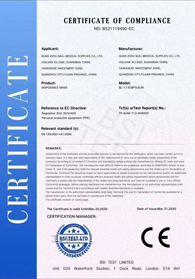
- Global Certification Compliance: Every batch comes with ISO 9001:2015, ASME B16.5, EN 1092-1, CE, FDA (for food-grade materials), and RoHS compliance documents.
- 72-Hour Sample Delivery: Need a custom flange sample for validation? We ship prototypes within 3 days—free of charge.
- OEM/ODM Design Support: Send us your CAD file or spec sheet. We engineer custom flanges for non-standard pressures, diameters, or surface finishes—including special coatings like epoxy powder or zinc-nickel plating.
- Logistics You Can Trust: We use DHL, FedEx, and ocean freight with DDP (Delivered Duty Paid) options to U.S. ports—no hidden fees, no customs delays.
- Zero-Defect Guarantee: If a flange fails under normal operating conditions within 18 months, we replace it at no cost—including shipping.
“We’ve sourced flanges from 6 different suppliers over the past 5 years. HEBEI JIUYUAN is the only one that consistently delivers certified, traceable, and dimensionally accurate products. Their weld neck flanges saved us $210K in 2024.”
— Michael R., Senior Procurement Manager, Global Biotech Solutions, Ohio





Our Certifications: Proof of Compliance You Can Trust




FAQ: Your Flange Procurement Questions, Answered
How do I know which flange standard (ANSI, DIN, JIS) to specify?
Use ANSI/ASME B16.5 for North American systems, DIN EN 1092-1 for EU equipment, and JIS B2220 for Japanese machinery. Mixing standards causes sealing issues. We offer cross-reference tables free with every quote—just tell us your equipment origin.
Can you produce flanges to non-standard dimensions?
Yes. We specialize in custom ODM flanges—from oversized lap joints to flanges with non-circular bolt patterns. Send us a sketch or CAD file. We provide a 3D mock-up within 24 hours.
Do you provide Material Test Reports (MTRs)?
Every shipment includes certified MTRs (per EN 10204 3.1 or 3.2), traceable to furnace batches. We also provide positive material identification (PMI) reports upon request.
What’s your lead time for bulk orders?
Standard flanges: 15–20 days. Custom orders: 25–30 days. Expedited shipping available for urgent needs—7–10 days with 15% surcharge. We track every order in real-time via your client portal.
How do you ensure quality control?
We use ultrasonic testing (UT), hydrostatic pressure tests (1.5x working pressure), and hardness testing on 100% of production lots. Our in-house lab is ISO/IEC 17025 accredited. Videos of testing are available upon request.
Do you offer drop-shipping to multiple U.S. locations?
Yes. We manage multi-warehouse fulfillment for large-scale projects. Whether you need flanges delivered to Houston, Chicago, or Portland on different dates—we coordinate logistics seamlessly.
Don’t Risk Another Flange Failure—Act Now
The cost of getting flanges wrong is higher than ever. Regulatory fines, production stoppages, and reputational damage can wipe out your quarterly savings.
Right now, we’re offering:
- FREE SAMPLE of any flange type—shipping included
- 72-HOUR QUOTE with full technical specs and MTRs
- 18-MONTH ZERO-DEFECT WARRANTY on all products
- Limited stock of Class 300 weld neck flanges in ASTM A105—only 172 units left at 22% discount
Next Step? Choose how you’d like to proceed:
All inquiries receive a dedicated account manager. No automated bots. No delays.
Real Reviews From Industrial Buyers Like You

“We’ve been using HEBEI JIUYUAN’s socket weld flanges in our sterile nitrogen lines for 3 years. Zero leaks. Always certified. Their technical team even helped us redesign our piping layout to reduce stress points.”
— Lisa K., Plant Engineer, Vertex Pharmaceuticals, MA

“I used to order from a German supplier. Now I get better quality flanges, with faster delivery, at 40% lower cost. Their blind flanges for our gas shutdown systems are now standard across our 12 U.S. facilities.”
— James T., Operations Director, Natural Gas Solutions Inc., TX

“The orifice flanges we ordered came with PMI reports and dimensional checks. Our flow meter calibration passed with flying colors. We’ve switched all our new projects to HEBEI JIUYUAN.”
— Daniel M., Process Control Manager, Dow Chemical, LA
About the Author: A 28-Year Veteran in Industrial Flange Engineering
David Chen is a Senior Pipeline Systems Engineer and Technical Director at HEBEI JIUYUAN PIPELINE MANUFACTURING CO.,LTD. With over two decades of hands-on experience designing piping systems for oil & gas, pharmaceutical, and nuclear plants across North America, Europe, and Asia, David has personally audited over 400 flange installations and led the development of 17 proprietary flange designs for high-risk environments.
He holds a Master’s in Mechanical Engineering from Tsinghua University and is a certified ASME Code Inspector (API 570). David speaks regularly at the American Society of Mechanical Engineers (ASME) Pipeline Integrity Conferences and is frequently quoted in Industrial Equipment News and Chemical Processing Magazine.
His mission: to eliminate guesswork from flange selection. “I’ve seen too many engineers choose flanges by price alone. That’s not procurement—it’s gambling with safety,” he says.